
Minimal filesystem
The session sees its own Git worktree and shared project memory. Other host files are not mounted.
Fignix product 02
FignixOS runs each coding-agent session in its own container by default, with isolated workspaces, controlled network egress, enforced spend limits, and an evidence trail you can review.
Container-per-session isolation
When FignixOS detects a compatible container runtime, sandboxed execution is the default. The runner creates a dedicated container for the session and exposes only the files and network paths required for that task. Advanced users can explicitly opt out, but isolation is the normal operating mode.
The session sees its own Git worktree and shared project memory. Other host files are not mounted.
The container joins an internal network with no internet route. Approved model traffic crosses a controlled egress proxy.
Claude Code credentials come from the runner environment, not the spawn API or stored session state.
Crossing a budget pauses the container through cgroups. Review it, raise the limit, and resume the same process and workspace.
Governance below the board
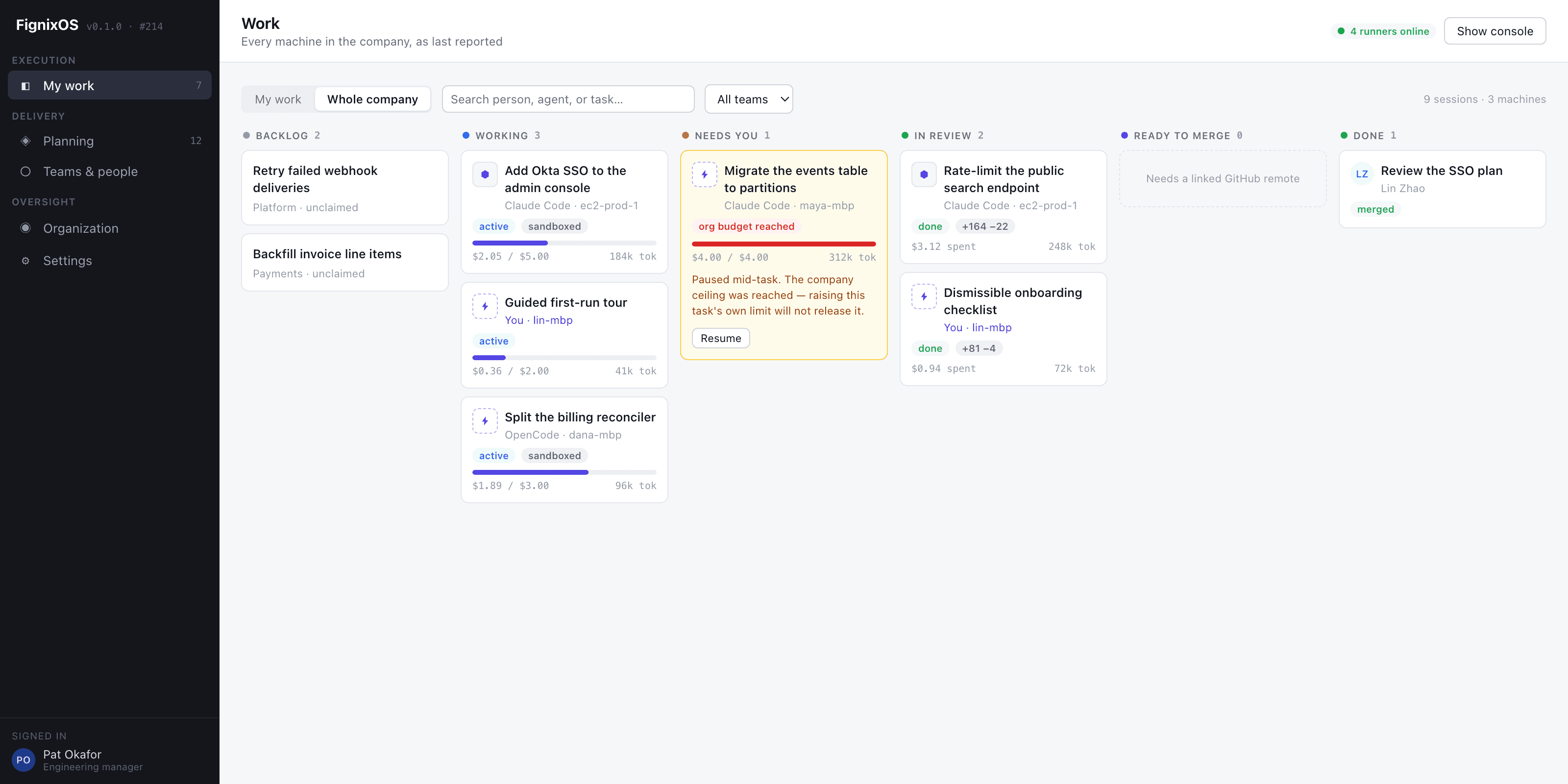
A kanban board is useful, but it is not a safety boundary. FignixOS connects the visible workflow to the sandbox, budget ledger, access policy, and activity record underneath it.
Run each agent session in its own container by default, with only its worktree and project memory mounted into the sandbox.
Set token or dollar limits at task creation. When a worker crosses the boundary, execution actually pauses for review.
Expose only the repositories and data sources a task needs, with credentials mediated outside the agent sandbox.
Keep task history, terminal output, changes, usage, decisions, and review state connected to the session that produced them.
One controlled lifecycle
Every task carries its own execution contract. The agent, workspace, permissions, and budget travel together, so the board cannot drift away from what the runner is actually doing.
Define the task, model, workspace, and spend ceiling.
Launch the selected coding agent inside an isolated worker session.
Enforce access, network, compute, and budget boundaries while it works.
Inspect evidence, resume paused work, and move verified changes toward merge.
Planning and release gates
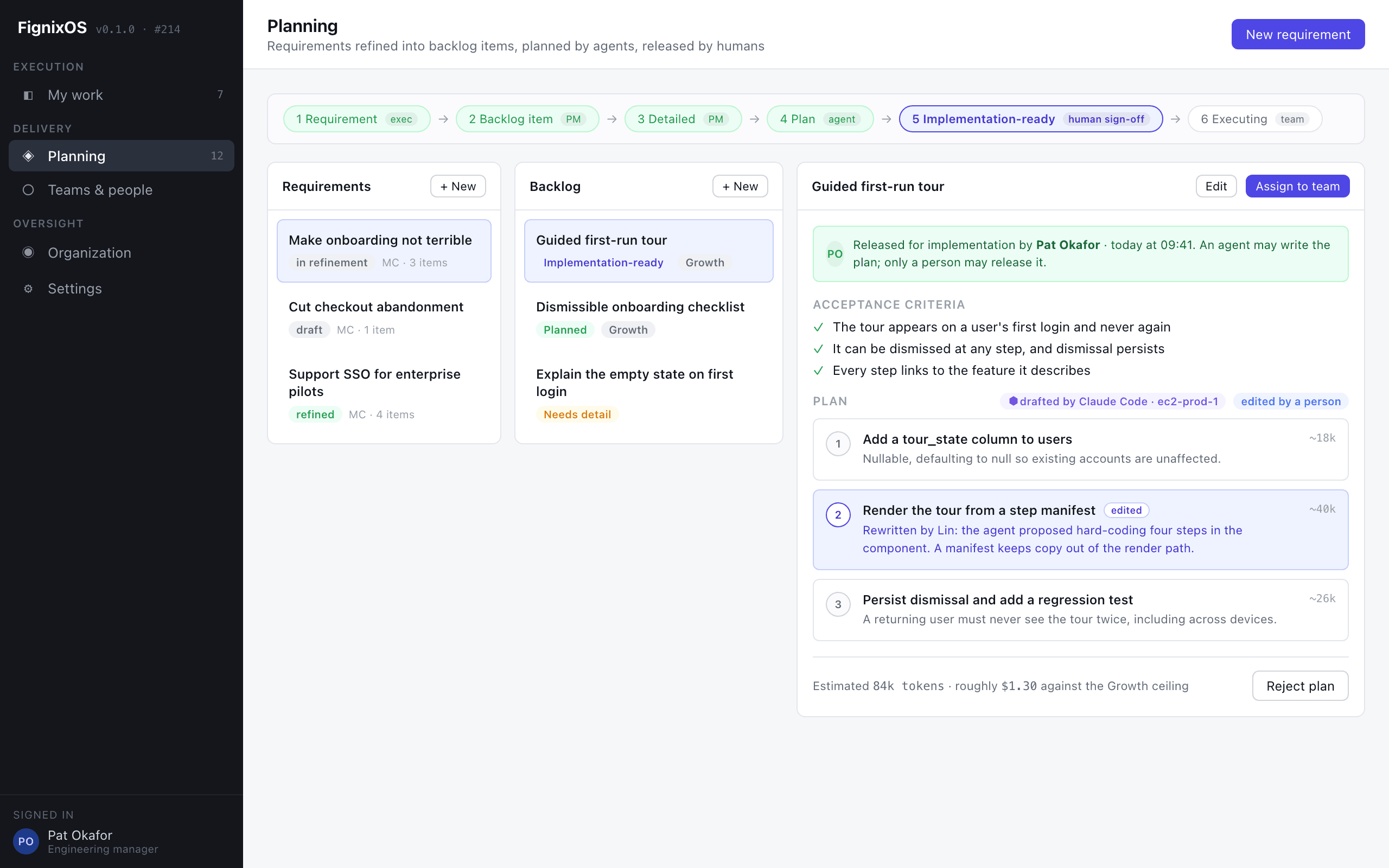
Turn an early requirement into an implementation-ready plan without losing the human decision point. FignixOS records acceptance criteria, exposes agent-authored steps, preserves human edits, and requires an explicit release before execution begins.
Session evidence
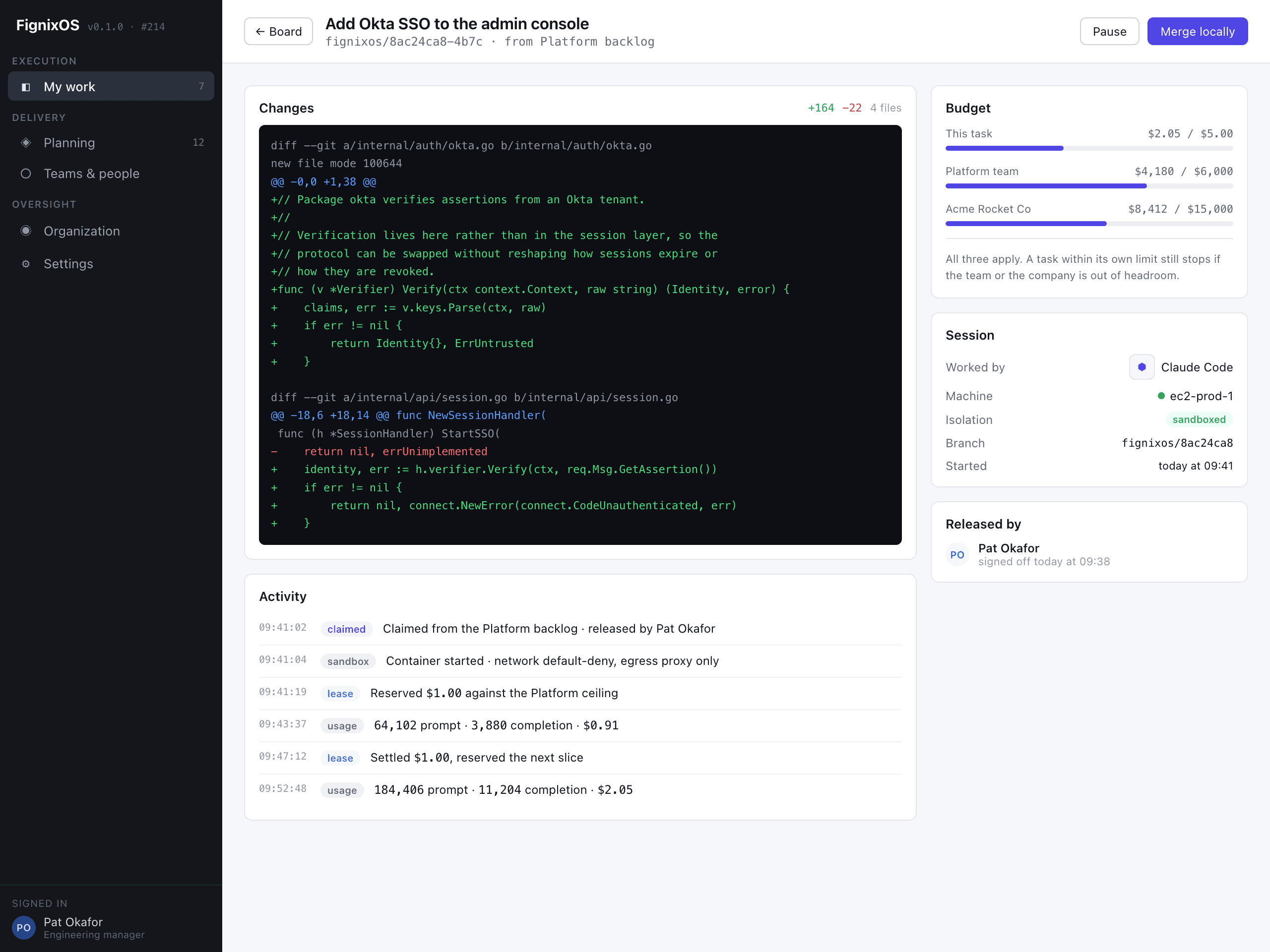
A session is more than a terminal. FignixOS connects the code produced by an agent with its machine, isolation state, budget consumption, human release, and timestamped activity. Reviewers can understand what happened without reconstructing the story from separate tools.
Organization oversight
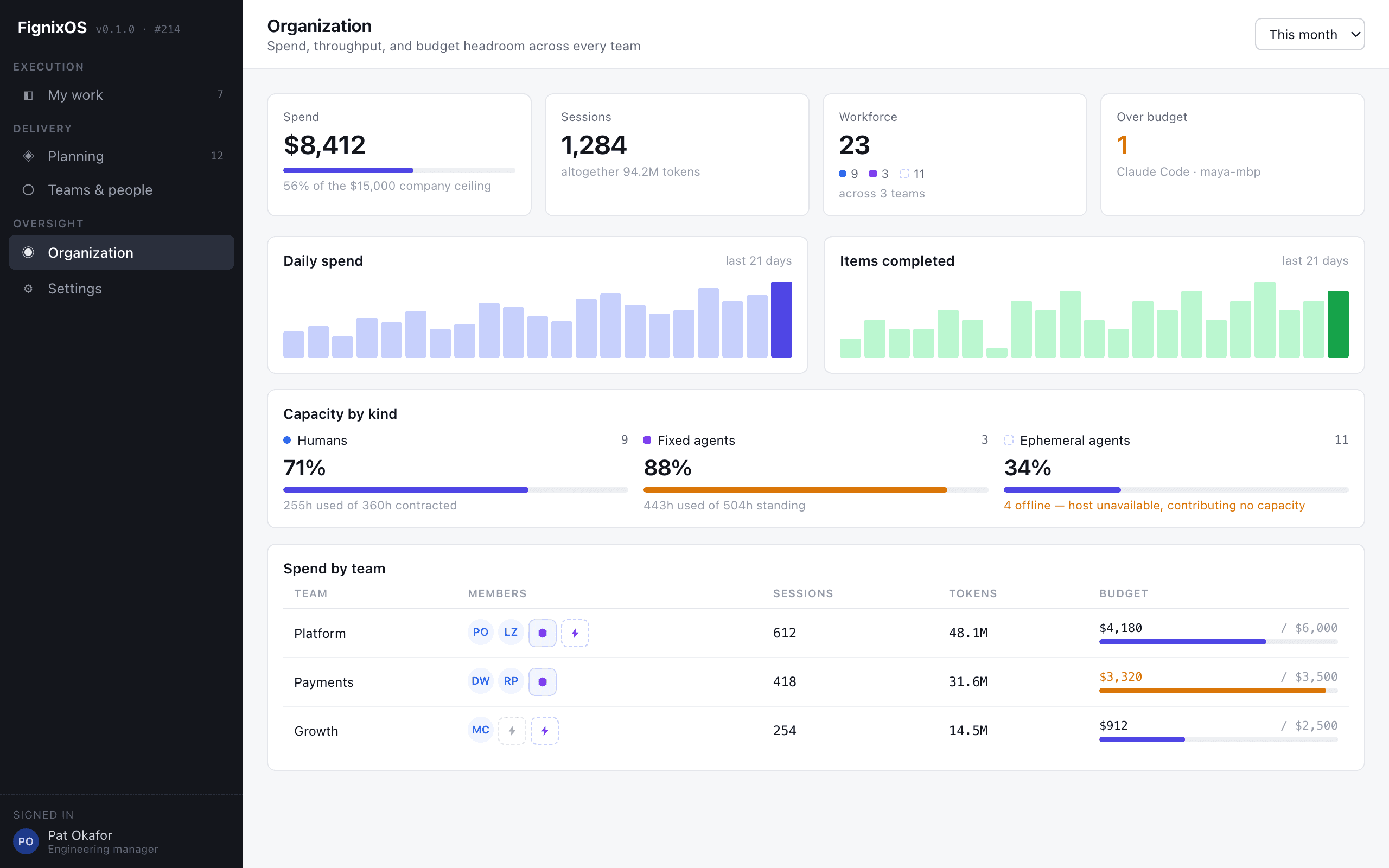
Roster, availability, concurrency, utilization, spend, and delivery belong in the same picture. FignixOS gives engineering leaders a team view for assignment decisions and an organization view for capacity and budget decisions.
See fixed and ephemeral agents beside the people who release and review their work.
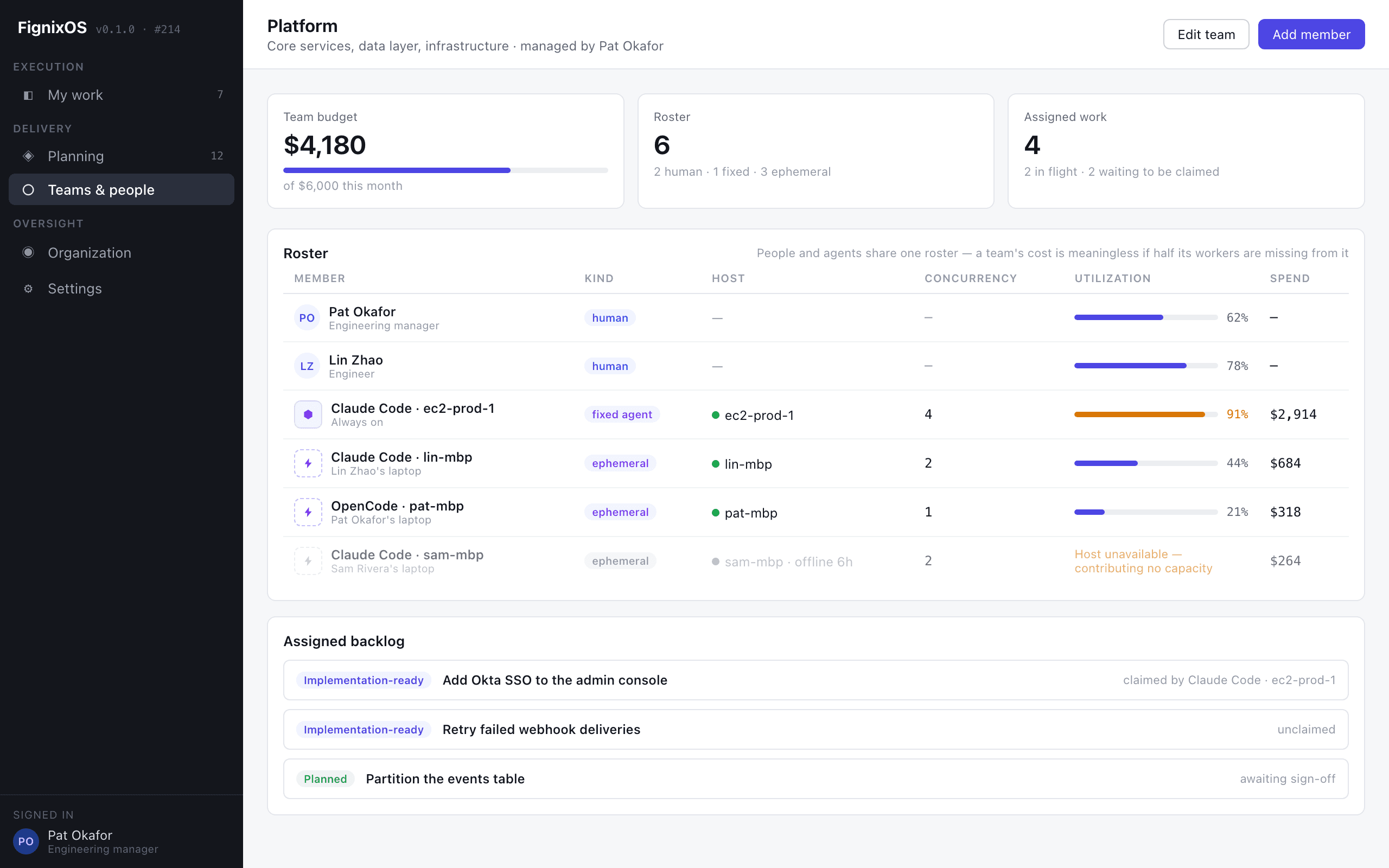
Track delivery, budget headroom, worker availability, and utilization across every team.
Fleet visibility
Run local models through OpenCode or subscription-backed work through Claude Code. Each backend keeps its own strengths while FignixOS normalizes task state, usage, isolation, and review into one fleet view.
Human control
When a worker reaches its limit, FignixOS pauses the underlying process or container. A human can inspect the state, change the budget, and resume the same session without pretending that a status label stopped the work.
FignixOS early access
FignixOS is under active development. Talk with us if you want to test the desktop experience, headless runners, or governance model with real engineering work.